Direct-on-line (DOL) starting can result in high inrush currents, voltage dips, and excessive mechanical stress on both the motor and the driven equipment. Autotransformer starters minimize these effects by supplying the motor with a reduced starting voltage.
Motor Starting Autotransformers significantly reduce starting current while providing sufficient starting torque for a wide range of applications. Standard voltage taps are typically 50%, 65%, and 80% of the rated supply voltage. Compared with reactor starters, autotransformer starters achieve lower line current while delivering higher starting torque for the same motor terminal voltage.
During starting, the motor is connected to the selected autotransformer tap. Once the motor reaches the required speed, it is automatically switched to full line voltage for normal operation.
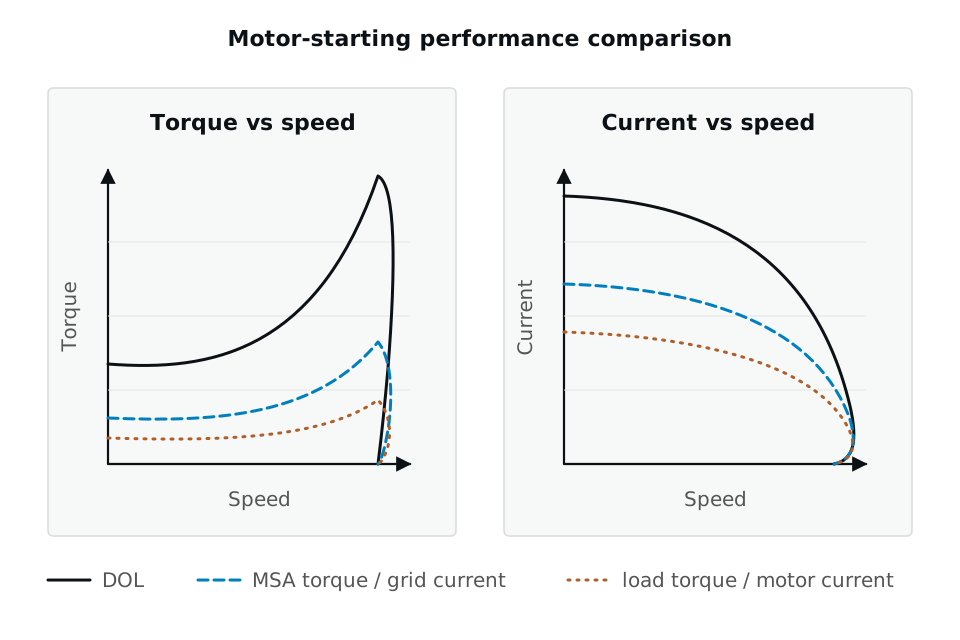
- Reduced motor terminal voltage (determined by the transformer tap ratio)
- Reduced line current compared with direct-on-line (DOL) starting
- Motor current is proportional to the inverse of the transformer ratio
- Starting torque is proportional to the square of the motor terminal voltage
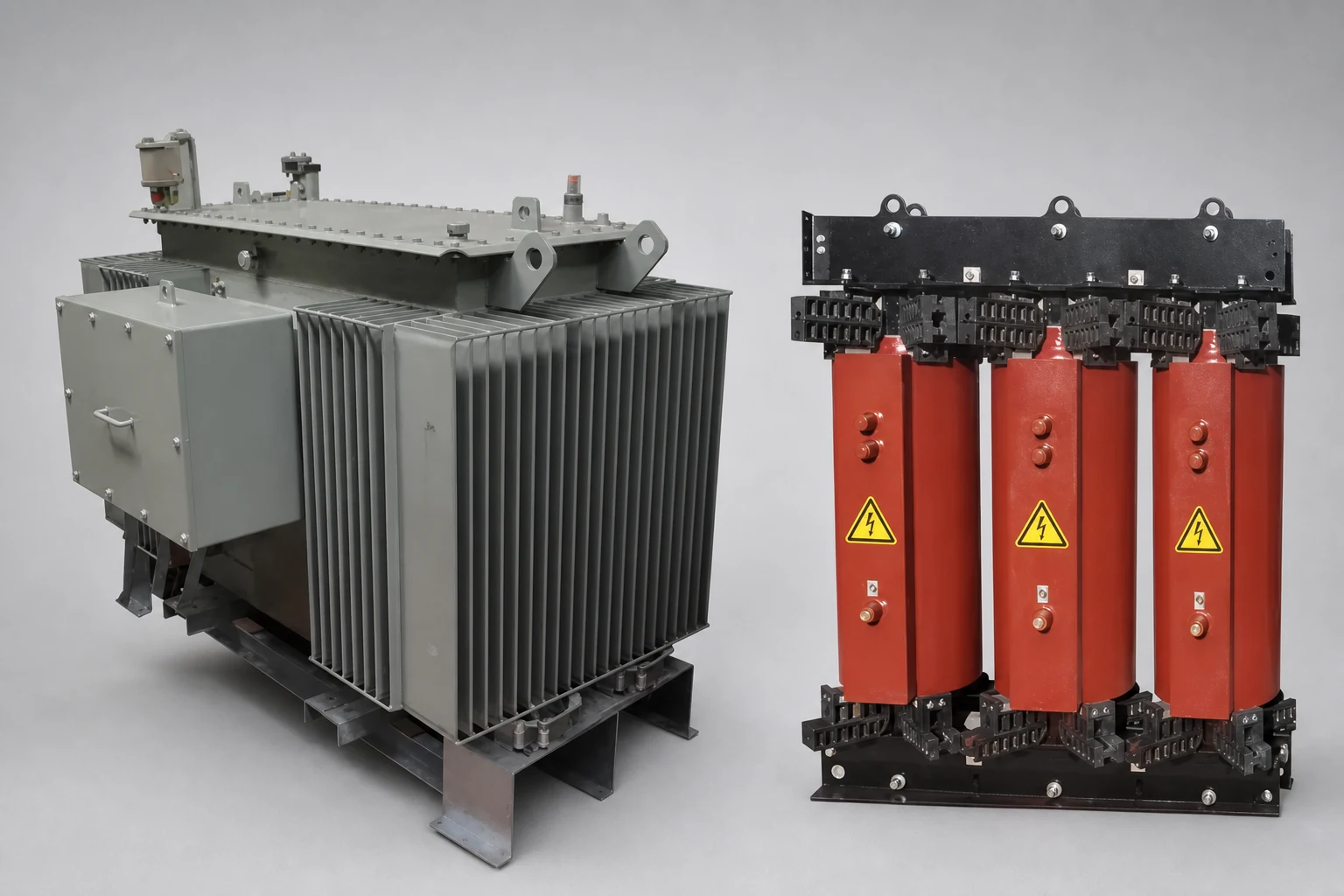
- Type
Dry-type or oil-immersed
Cast resin
- Rated Voltage
≤15kV
- Rated Current
≤1600A*
- Frequency
50 Hz / 60 Hz
- Insulation Class
≤Class F
155 °C
- Winding Material
Copper or aluminium
- Installation
Open-frame construction
LV autotransformers
- Ambient Temperature
−30 °C … 55 °C
- Applicable Standards
- IEC 61558IEC 60076-2
*Higher current ratings and ambient temperatures are available upon request.
- IVC
- Incoming vacuum contactor
- CT
- Current transformer
- BVC
- Bypass vacuum contactor
- NVC
- Neutral vacuum contactor
- SA
- Surge arrester
- %
- Tap: motor voltage at start, in % of the line voltage (100% at the line end, 0% at the neutral point); the connection can be moved to another tap
- Complete motor starter panel with autotransformer
- Winding thermostats