Motor Starting and Control Resistors are used to control the starting and speed of electric motors in a wide range of industrial applications.
These resistors limit the starting current, reduce voltage drop across the power system, and provide smooth acceleration, thereby protecting both the motor and the driven equipment.
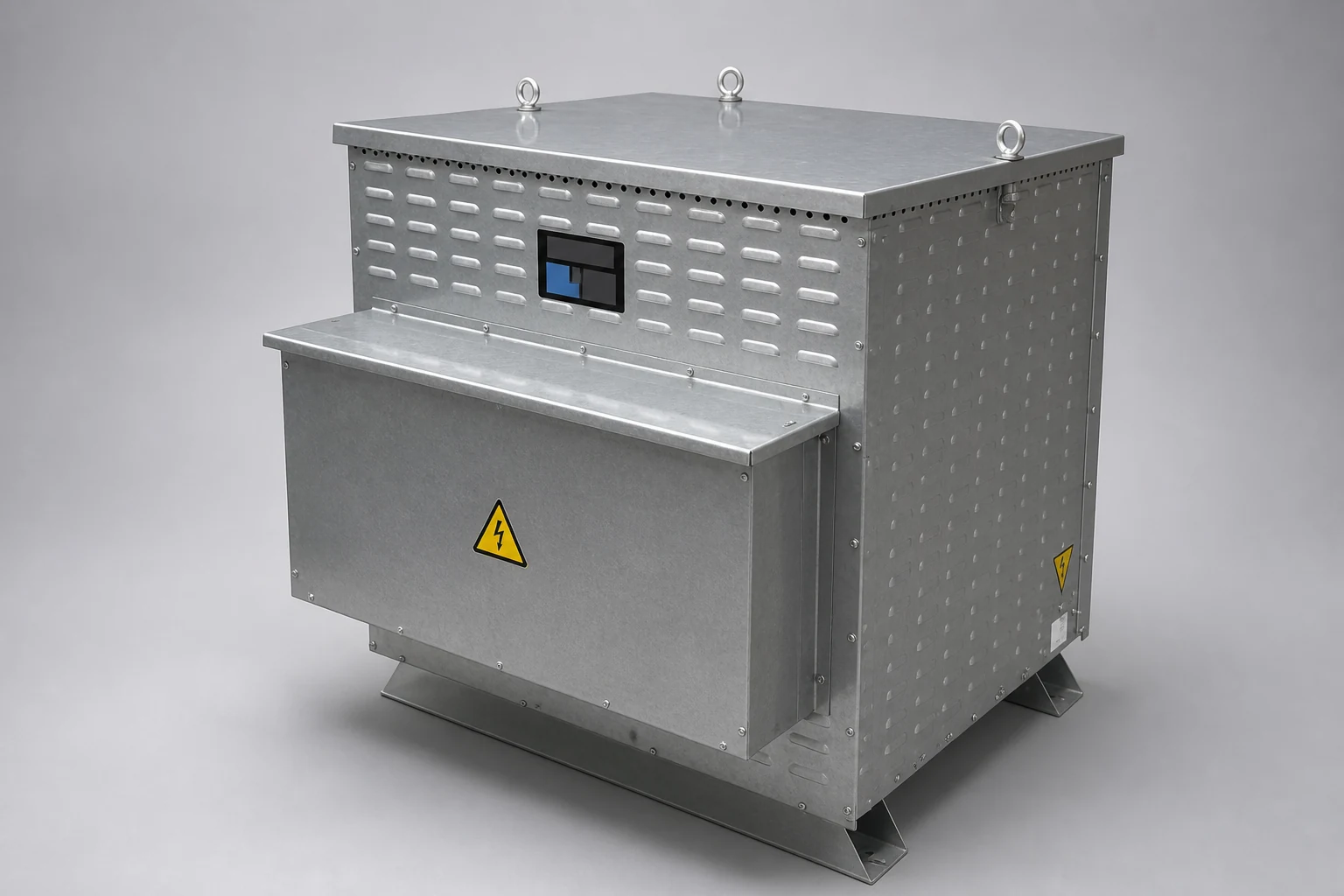
Stator-Connected Starting Resistors limit the voltage applied to the motor terminals during start-up, thereby reducing the starting current.
Motor starting resistors are used to reduce the voltage at the motor's stator terminals, ensuring that less current is drawn from the mains. Because the motor has a very low impedance at the initial moment of starting, it can draw up to six times its rated current from the grid. To limit this inrush current, series resistors are connected to the stator input. As a result, a portion of the mains voltage drops across the resistor, meaning less voltage is applied to the motor terminals, which in turn reduces the amount of current drawn.
As the motor accelerates, the rotor impedance—and consequently the motor's total impedance—increases, causing the current drawn from the mains to gradually decrease. Once the motor reaches its rated speed, the series-connected resistors are bypassed from the circuit via contactors. This eliminates the power losses on the starting resistors and allows the motor to continue operating at its rated voltage.
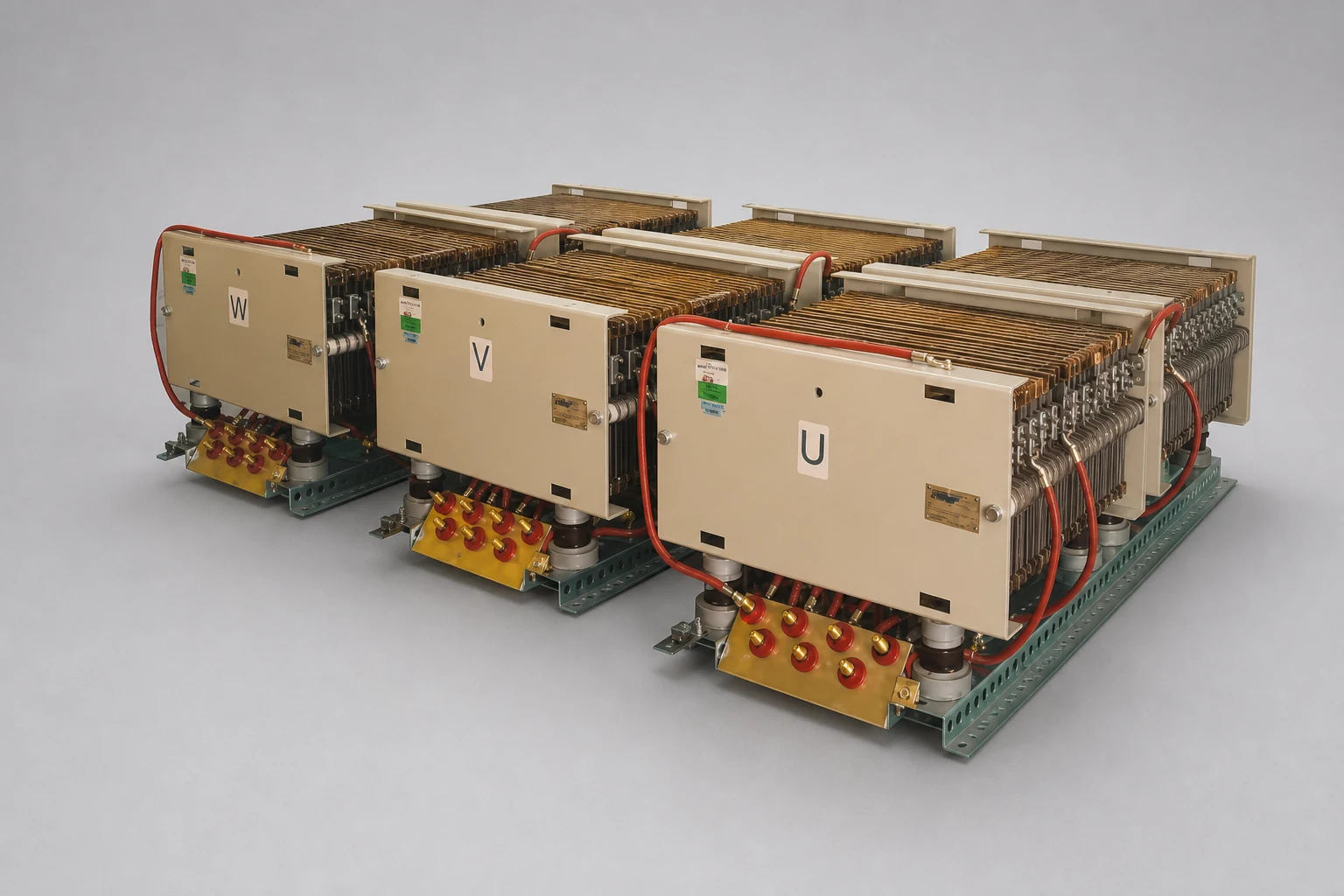
Rotor-Connected Resistors are primarily used with slip-ring induction motors requiring high starting torque, such as conveyors, crushers, hoists, and other heavy-duty industrial applications. By inserting external resistance into the rotor circuit, the motor's maximum (breakdown) torque is shifted closer to the starting condition, providing high starting torque while limiting the starting current. The rotor resistance is divided into several steps and controlled by contactors or motor starters. As the motor accelerates, the resistor sections are progressively short-circuited until the rotor is directly connected for normal operation.
- Overhead cranes
- Lift trucks
- Machine tools
- Conveyors
- Cement plants
- Industrial controls
- Steel mills
- Ships and submarines
- On-load starting motors
- Designed and tested in accordance with applicable IEC and IEEE standards
- Suitable for squirrel-cage induction, slip-ring induction, and synchronous motors
- Robust and durable construction
- Stainless-steel grid or alloy resistor elements
- Excellent performance in harsh industrial environments
- Squirrel-Cage Induction Motor Starting Resistors
- Slip-Ring Induction Motor Rotor Resistors
- Crane Control Resistors
- Motor Starting Resistors
- Motor Speed Control Resistors
- Synchronous Motor Resistors
- Application Type
- Motor Rated Power (kW or HP)
- Rotor Current (A)
- Rotor Voltage (V)
- Required Starting Torque (%)
- Required Starting Time (s)
- Duty Cycle
- Number of Starting Steps