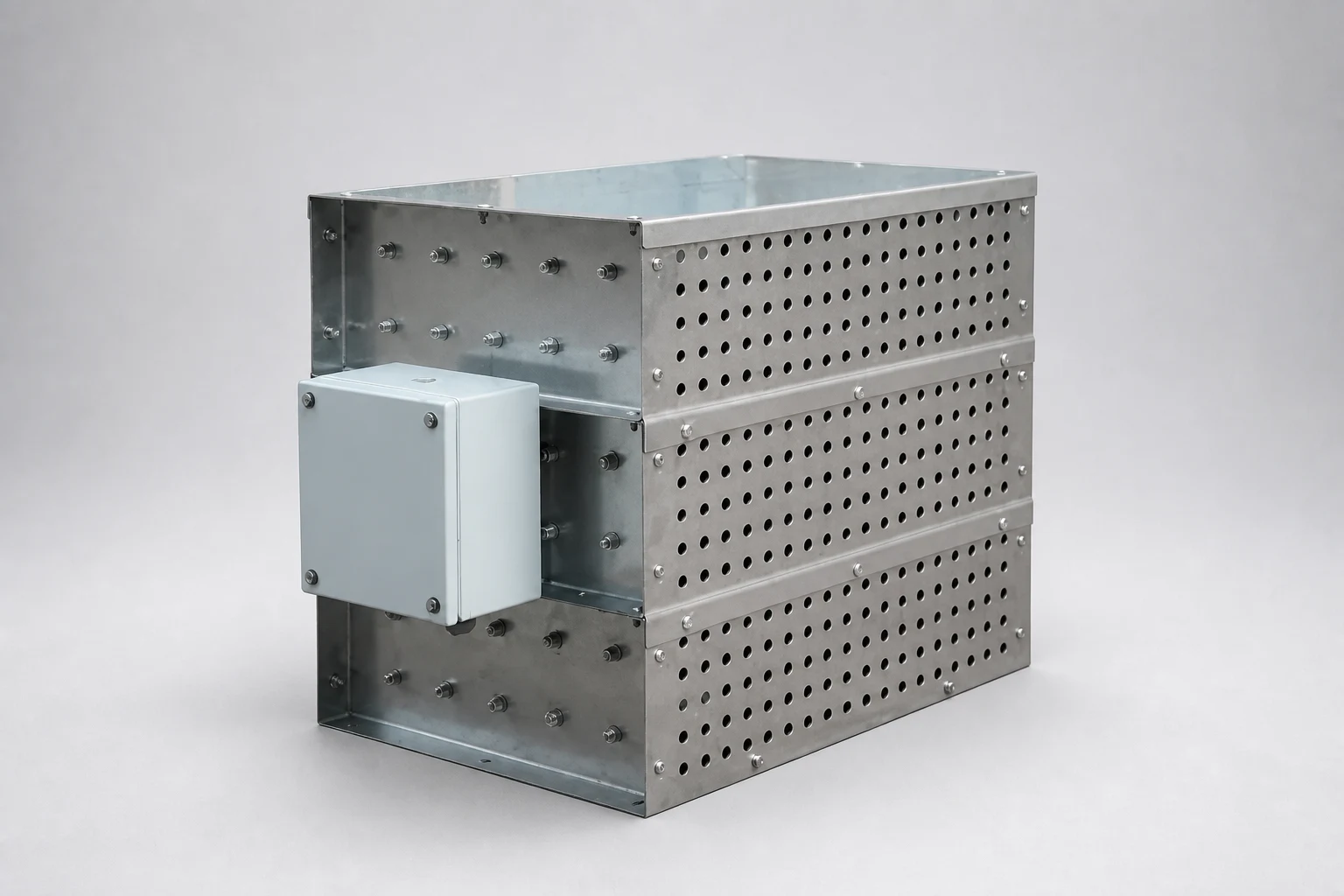
Crowbar Resistors are three-phase resistor banks connected to the rotor circuit of Doubly-Fed Induction Generators (DFIGs), commonly used in wind turbine generators.
They protect the rotor-side converter during grid disturbances by limiting excessive rotor currents and DC-link overvoltages. Because DFIG power converters have limited overcurrent capability, additional protection is required during voltage dips and other grid faults. When the rotor current or DC-link voltage exceeds a preset threshold, the crowbar protection circuit temporarily bypasses the rotor-side converter and connects the crowbar resistors to the rotor circuit. During this period, the DFIG temporarily operates as a squirrel-cage induction generator until the fault is cleared and normal converter operation is restored.
Crowbar resistors are designed to provide sufficient resistance to limit rotor fault currents while maintaining acceptable rotor voltage levels. They feature low inductance and high thermal capacity to withstand very high currents for short-duration duty cycles.
- Ir
- the current of the rotor before fault
- Ifss
- steady-state fault current
- Ifmax1, Ifmax2
- maximum fault current
- R1, R2
- crowbar resistors