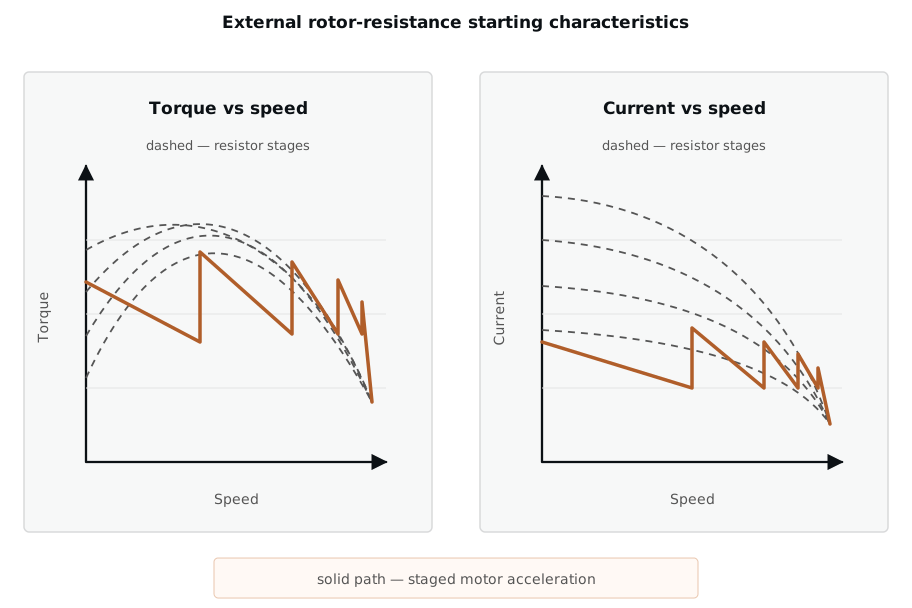
Slip-Ring Motor Starters use external resistors connected to the rotor circuit to control starting current, torque, and acceleration characteristics.
They are primarily used in applications requiring high starting torque, such as loaded conveyors and heavy industrial drives. The external resistors shift the motor's maximum torque point to the starting region, enabling smooth acceleration under high-load conditions. A contactor-based control system gradually bypasses the rotor resistors in steps as the motor speed increases until the motor reaches normal operating conditions.
- Fans
- Pumps
- Conveyors
- Crane systems
- Mills
- Mixers
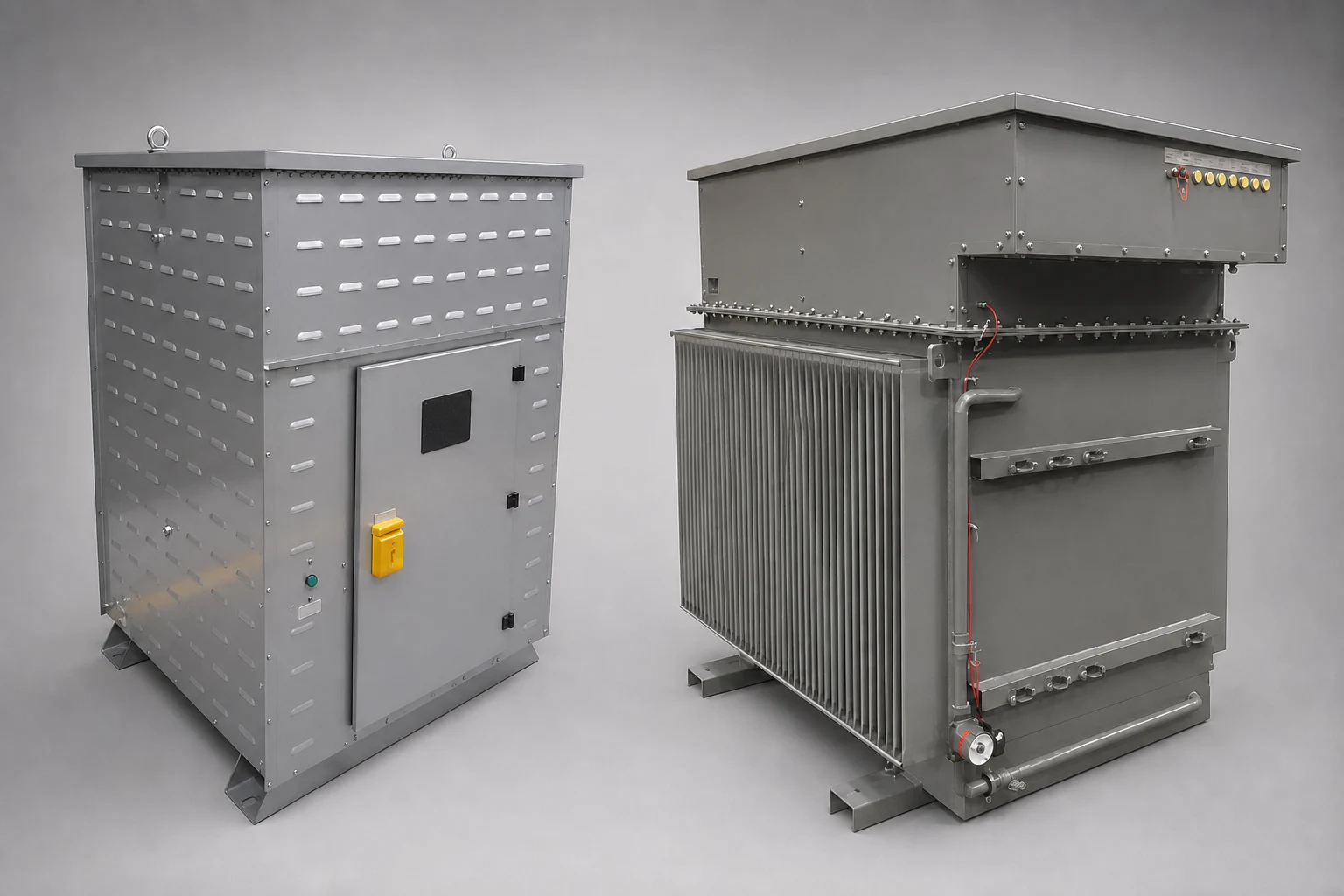
- Resistor Type
Oil-immersed
- Construction Type
Metal-enclosed or metal-clad
- Rated Voltage
≤15kV
- Rated Current
≤1600A*
- Ambient Temperature
−30 °C … 55 °C
- Control
Digital controller based on motor current or time relay
- Protection
Motor protection relay
*Consult Hilkar for higher ratings
- K1–K4
- Shorting contactors, closing one after another as the motor speeds up: K1 first (bypasses R1), K4 last (shorts the rotor at the slip rings)
- R1–R4
- Rotor resistor steps